Chargement…
Independent press · Cybersecurity, governance & the human factorContactSearchNewsletterThe book ▸EN · FR
Cyber revue · Governance & the human factor
Edition of 13 September 2026 · No. 148Independent pressGran Canaria · Bilingual FR·EN
Topic
Europe & réglementation
14 analyses on this topic, from the most recent to the oldest.
 PoliticsCybersecurity must not become an election issueThe summer of 2026 gave France a glimpse of what a digitised administration produces when it is not secured. The political year is opening, the presidential campaign is starting, and cybersecurity is finally going to find its place in public debate. That is exactly what worries me.
 Artificial IntelligenceThe train we will not catchOn 1 August, a model OpenAI has not even put on sale delivered ten results on mathematical problems stuck for decades, for two thousand dollars of compute. On 2 August, Europe brought into force its duty to write « generated by AI » at the foot of content.
 PoliticsOn 1 January 2027, France will verify the identity of all its adultsThe law passed on 21 July bans social media for under-fifteens. To enforce it, it requires forty million adults to prove their identity before they can speak. Only one of the two measures was debated; it is the other that will remain.
 PoliticsThe century turns on technology. Our politicians invent a tax by the gigabyte.The Socialist program's tax on data flows is not just a bad idea. It is the confession of a political class that, faced with the technological shift of the century, found nothing better than its oldest reflex: look for what is not yet taxed, and tax it.
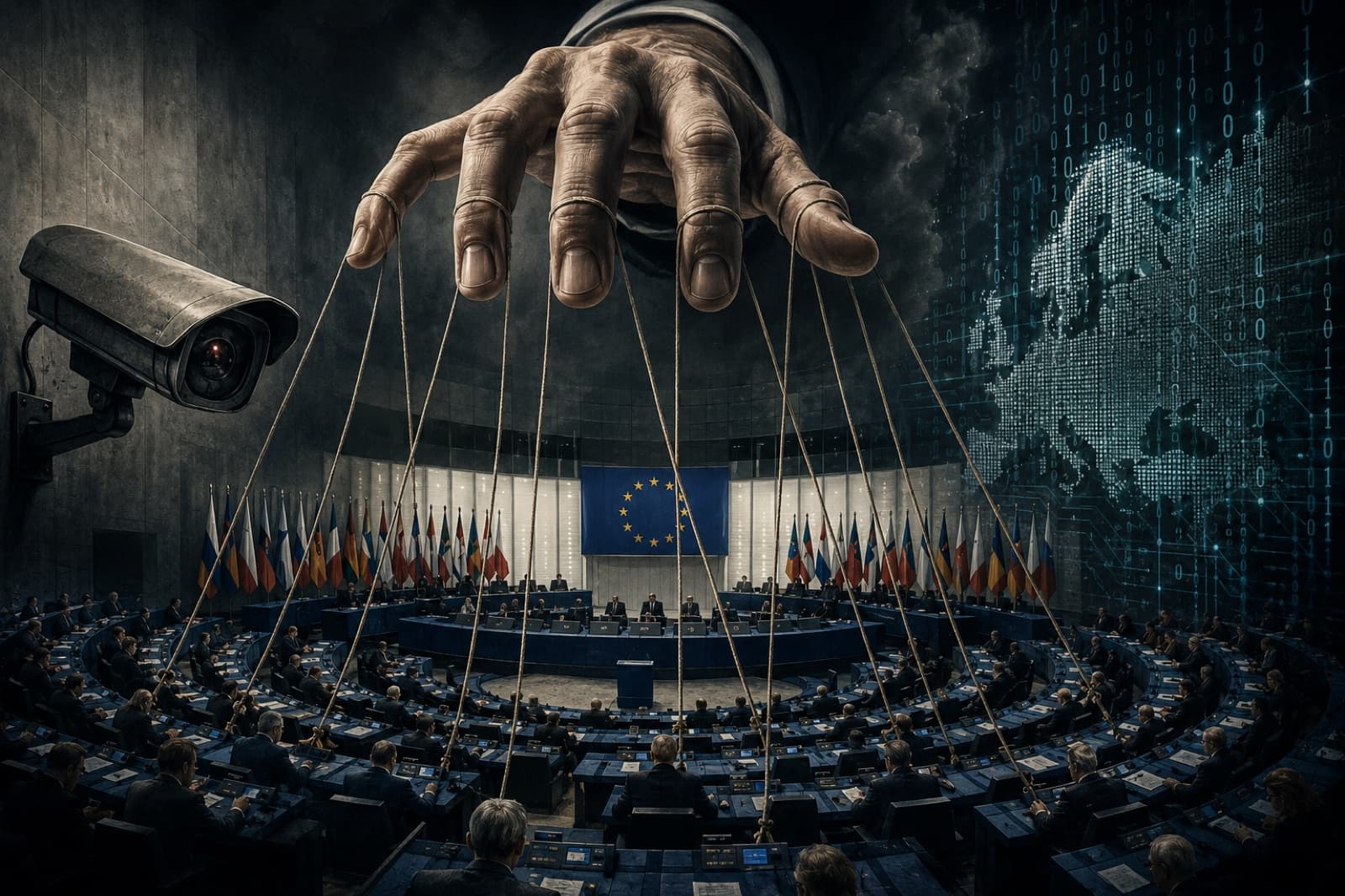 PoliticsChat Control: when Parliament revotes until it gets the right resultIn March, the European Parliament rejected Chat Control by 311 votes to 228. On Thursday, it revotes the same text, with no substantial change, under voting rules recalibrated to guarantee its adoption. The story of a revote, and of what it says about the value of a parliamentary decision.
 TechnologySuddenly, Everyone Is a SovereigntistOn June 12, at 5:21 p.m. Washington time, the U.S. government sent Anthropic a letter invoking national security. Nineteen days later, access was restored. In between, a continent learned what its digital sovereignty was worth, and a parliamentary report put a word on it.
 CybersecurityCNIL 2025 Report, reading a regulator in transitionData processors, AI, cross-regulation, misleading record figures: what the CNIL's 2025 annual report really says about regulation in 2026.
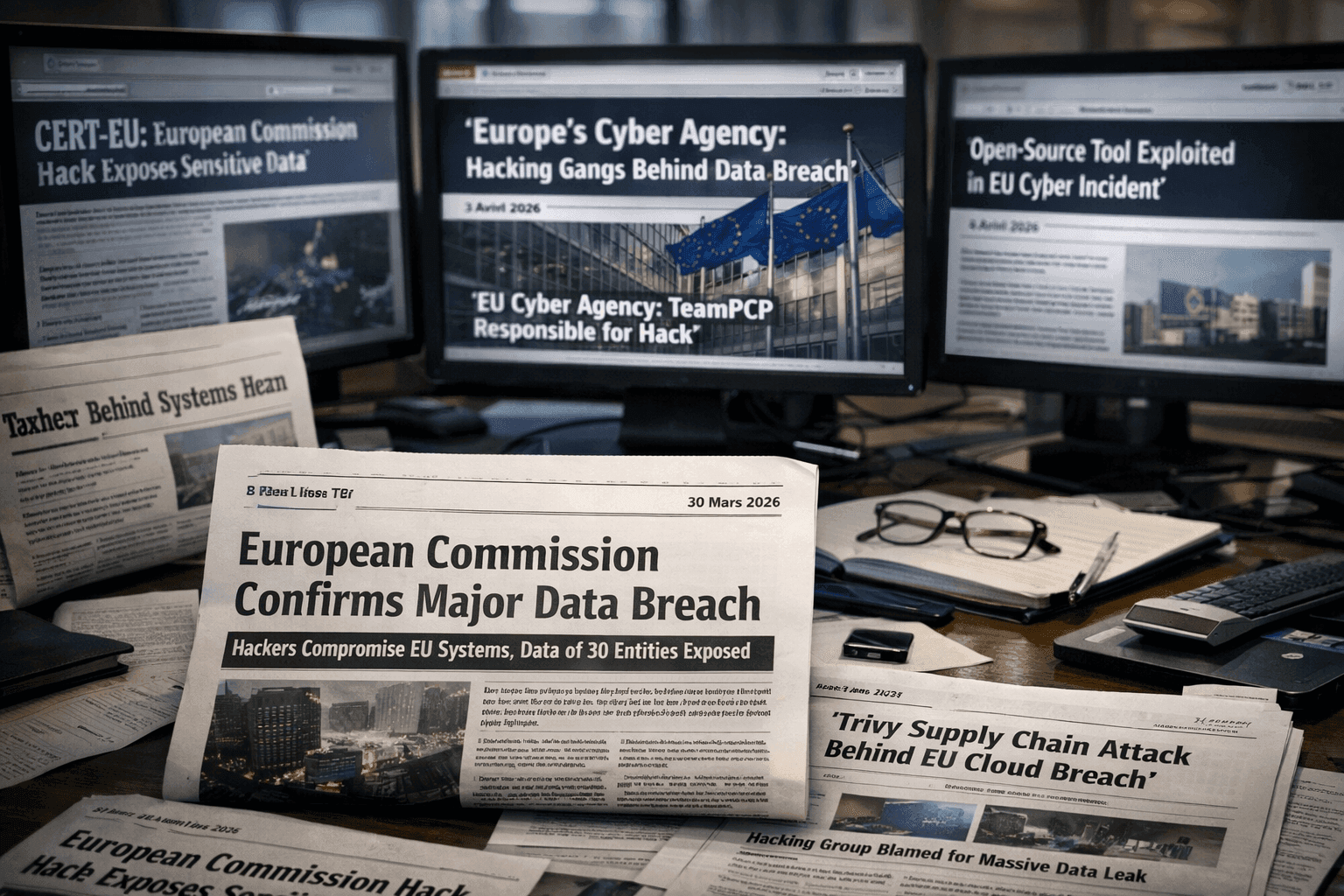 SocietyThe European Commission hacked: when the regulator becomes proof of what it denounces340 GB of data exfiltrated, 30 European entities hit, DKIM keys in the wild. The European Commission that drafts NIS 2, the Cyber Resilience Act and the cybersolidarity regulation has just proven, at its own expense, that directives do not…
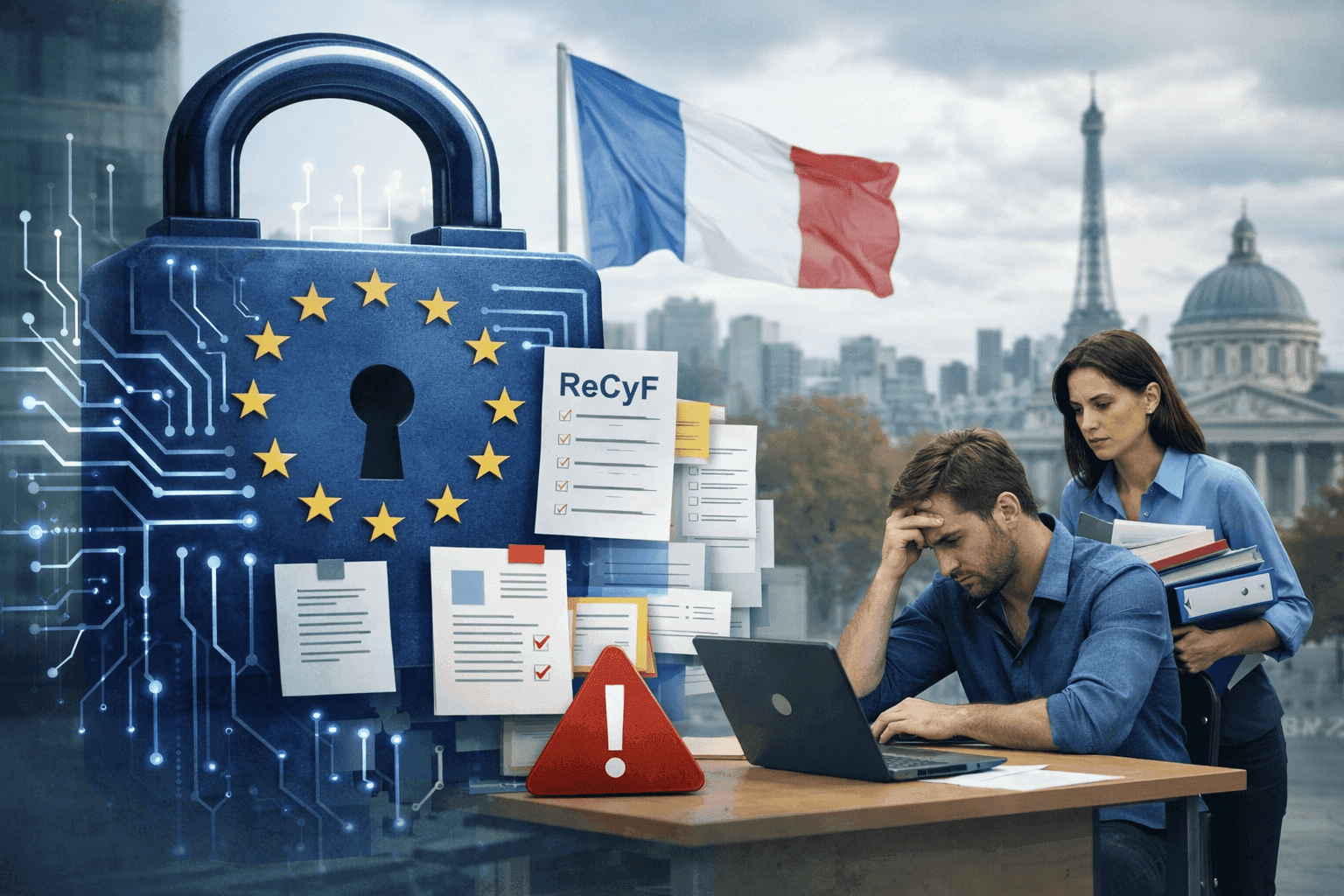 SocietyReCyF, backdoors and USB sticks: France in cybersecurity, between clarity and anachronismFrance produces a cyber framework of international quality while being incapable of passing the law that makes it applicable, because the DGSI wants to read your Signal messages. And the framework itself illustrates human risk with a USB stick in 2026.
 CybersecurityNIS2 in 2026: France falls behindFebruary 2026: NIS2 was supposed to have been operational for over a year. France is still waiting for its transposition law while most of its neighbours have already acted, and waiting for the text has become the excuse. Meanwhile, the attackers follow no calendar.
 CybersecurityFine for X, offensive against Telegram: Europe is waging war on digital freedomOn Friday 5 December 2025, the European Commission fined X, Elon Musk's platform, 120 million euros. On the surface: a simple slap on the wrist for failing to comply with the Digital Services Act (DSA). In reality?
 CybersecurityChat Control 2.0: Europe is playing with our digital freedomsIt is one small line in an obscure text. An article barely mentioned in the mainstream press. A closed-door meeting in Brussels.
 CybersecurityCybersecurity: for a real and civic digital sovereigntyWe have heard a great deal about "digital sovereignty" in cybersecurity over the past few years.
 CybersecurityDigital sovereignty: at the Senate, they hold hearings. But when do they act?The Senate did what it knows how to do: hold a series of hearings on digital sovereignty. Experts, industry players, representatives of the State.
Newsletter
Don't miss the next analysis