Cloud: mastering what you delegate
The cloud has become the default foundation of organisations' IT, and that is real progress: elasticity, availability, managed services that few companies could run on their own. But delegating your infrastructure does not delegate your responsibility. The shared responsibility model is often poorly understood: the provider secures the foundation, but access configuration, data encryption, identity management and monitoring remain the customer's job. Most incidents in the cloud do not come from a flaw in the provider, but from ordinary mistakes: a storage bucket left open, permissions that are too broad, an access key exposed in code. On top of this come deeper issues: where is the data really stored, which law is it subject to, and would we know how to change provider or keep operating if access were cut off? Mastering what you delegate means mapping your dependencies, hardening configurations, keeping a hand on your identities and your data, and anticipating reversibility rather than suffering it. This guide brings together the analyses on cloud and digital sovereignty to help you benefit from these services without giving up control.
 TechnologySuddenly, Everyone Is a SovereigntistOn June 12, at 5:21 p.m. Washington time, the U.S. government sent Anthropic a letter invoking national security.
 CybersecurityCISA, the GitHub leak: when the watchdog leaves the keys in the doorCISA, the US cyber agency, exposed its own AWS GovCloud credentials on public GitHub for 6 months. Anatomy of a leak in 7 failures.
 CybersecurityThe ANTS hack: the 2007 flaw, the 2026 cheque, and the gap no figure can closeLecornu calls the ANTS breach the "heist of the century." It is a student homework-assignment heist. A 2007 flaw. With 200 million euros of announcement effect on top.
 CybersecurityThe French state's cybersecurity roadmap: the document that says everything without meaning toAn official document lands on your desk. It comes from the Prime Minister. It is called "Roadmap of priority efforts for the state's digital security 2026-2027". You open it.
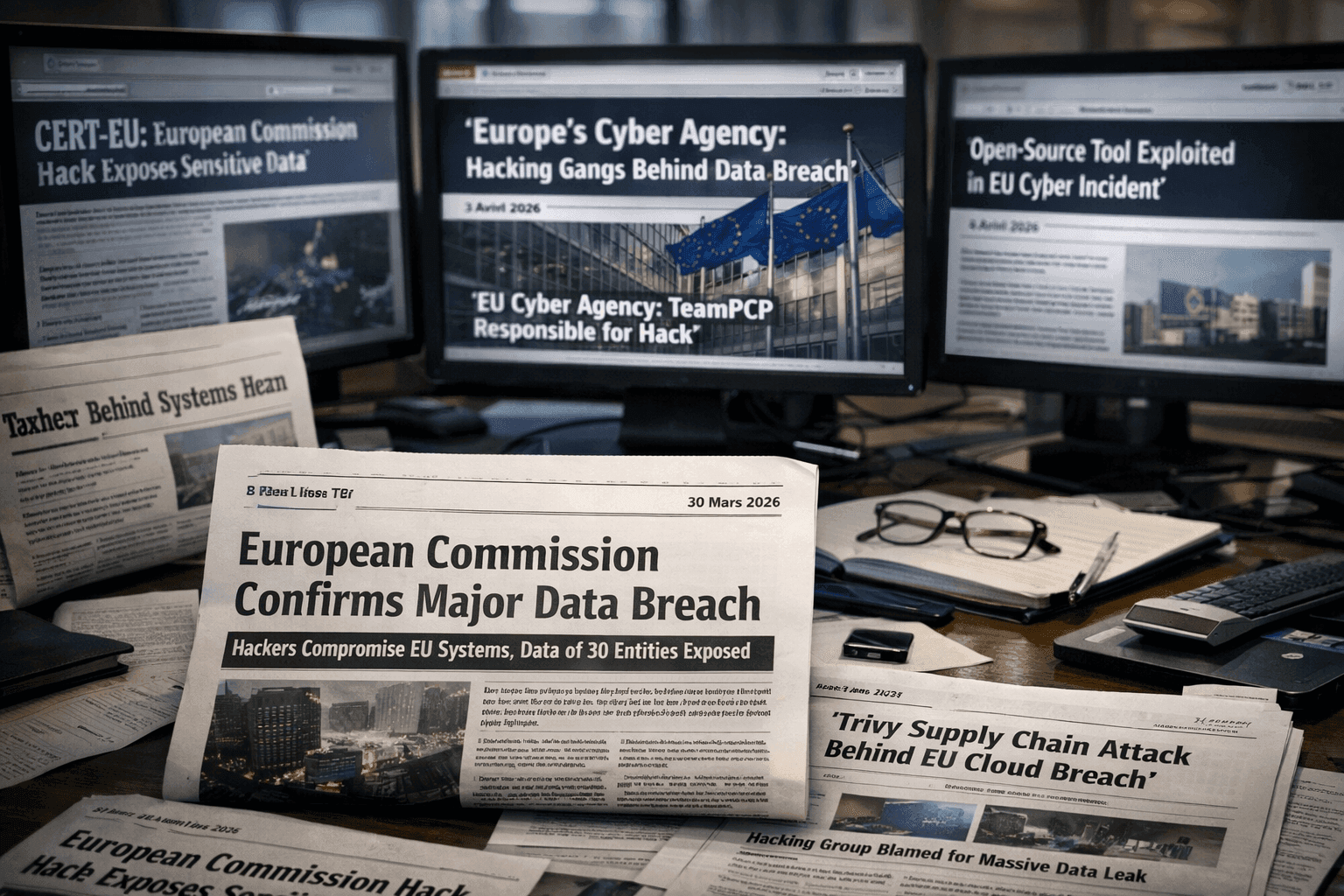 SocietyThe European Commission hacked: when the regulator becomes proof of what it denounces340 GB of data exfiltrated, 30 European entities hit, DKIM keys in the wild. The European Commission that drafts NIS 2, the Cyber Resilience Act and the cybersolidarity regulation has just proven, at its own expense, that directives do not…
 SocietyReCyF, backdoors and USB sticks: France in cybersecurity, between clarity and anachronismFrance produces a cyber framework of international quality while being incapable of passing the law that makes it applicable, because the DGSI wants to read your Signal messages. And the framework itself illustrates human risk with a USB stick in 2026.
 CybersecurityNIS2 in 2026: France falls behindFebruary 2026. NIS2 is supposed to have been fully operational for more than a year across Europe. Yet in France, we are still waiting for the final parliamentary debates, with adoption hoped for in the first quarter and a roadmap of…
 CybersecurityThe Health Data Hub: at last a step toward digital sovereigntyThe Health Data Hub (HDH) is a public platform created in 2019 to centralise, structure and make available, within a controlled framework, French health data for research, innovation and the steering of public policy that…
 CybersecurityFine for X, offensive against Telegram: Europe is waging war on digital freedomOn Friday 5 December 2025, the European Commission fined X, Elon Musk's platform, 120 million euros. On the surface: a simple slap on the wrist for failing to comply with the Digital Services Act (DSA). In reality?
 CybersecurityWhen the internet coughs, everyone catches a cold: why the Cloudflare outage concerns us allOn 18 November 2025, millions of users watched their digital services slow down, crash, or become unreachable. X, ChatGPT, Instagram, Canva, many banking and e-commerce services... all hit. The cause?
 CybersecurityGmail reads your emails to train its AI, and you probably haven't turned it offGoogle has just crossed a line. And as so often, without fanfare. For a little while now, Gmail can automatically analyse the content of your messages and attachments, not to filter spam or offer you an automatic reply, but...
 CybersecurityOpen letter to Emmanuel Macron. Cybersecurity is not a technical subject. It is a duty of the State.Mr President Macron. I am not writing to plead a cause. I am writing because it is time to stop pretending.
 PoliticsWhen Naive Environmentalism Becomes a Strategic VulnerabilityNorway has just made an explosive discovery: 850 electric buses running in Oslo can be stopped remotely by their Chinese manufacturer.
 CybersecurityWhat If We Trained Hackers to Defend the Republic?In France, we train engineers, lawyers, police officers, diplomats and teachers. But we still do not train, at scale, the very people already fighting the battles of the 21st century: hackers.
 CybersecurityCybersecurity: for a real and civic digital sovereigntyWe have heard a great deal about "digital sovereignty" in cybersecurity over the past few years.
 CybersecurityThe AWS incident: it was not an outage, it was a reality checkVenmo, Fortnite, Snapchat, Zoom, Coinbase... everything started to crash. Not because of ransomware, a large-scale attack or a geopolitical conflict.
 CybersecurityDigital sovereignty: at the Senate, they hold hearings. But when do they act?The Senate did what it knows how to do: hold a series of hearings on digital sovereignty. Experts, industry players, representatives of the State.
Don't miss the next analysis