Yoga and cybersecurity: attention as the first line of defense
We have grown used to talking about cybersecurity as a technical subject. And of course it is technical; but what if we learned to talk about it like yoga?
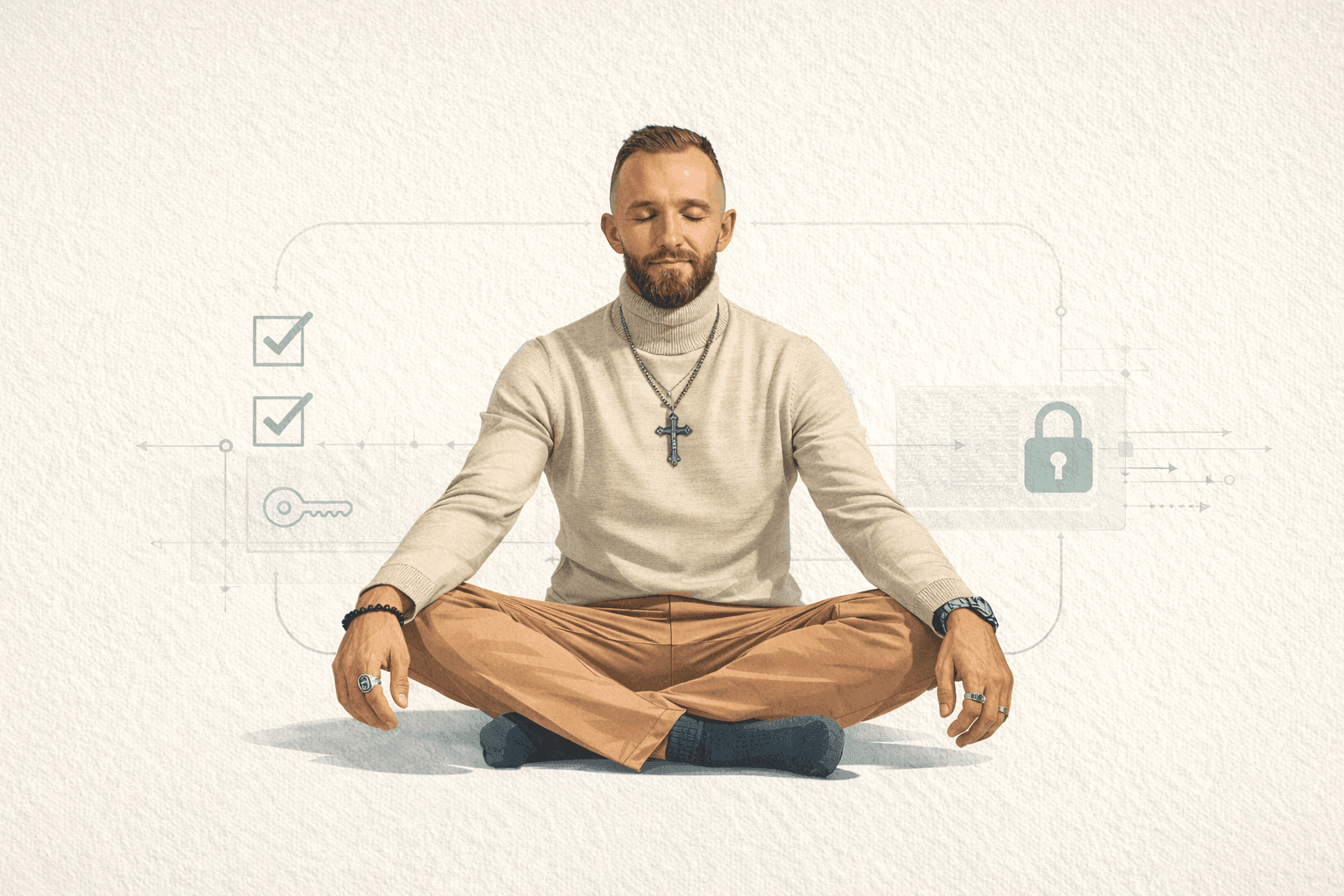
We have grown used to talking about cybersecurity as a technical subject. And of course it is technical: systems, identities, access control, segmentation, procedures.
But in real life, a large share of incidents begins somewhere else:
in a moment of inattention, fatigue, urgency or distraction.
This is not a criticism. It is an observation.
Cybersecurity is not only a matter of tools: it is also a matter of inner state. Of attention. Of presence. Of the ability not to act on autopilot.
This is the exact point where yoga, meditation, and what cyberpsychology brings to light, come together.
Why do most breaches run through a human being?
This is not a yoga teacher's intuition, it is the most stable figure in the industry. In the 2026 edition of Verizon's data breach report, published on 19 May and built on more than 22,000 confirmed breaches, the human element is present in 62% of cases, against 60% the previous year. Social engineering alone accounts for 16% of breaches, and among AI-assisted initial accesses, phishing weighs 44%.
In France, the picture looks the same seen from the victims' front desk. Cybermalveillance.gouv.fr passed the mark of 500,000 people assisted in 2025, up 20% in a year, and phishing remains the number one threat across all audiences, up 70%.
These numbers do not say that people are incompetent. They say where security is really decided: in one second of attention, in front of a screen, at 5pm on a Tuesday.
What social engineering is really after
Phishing and "modern" scams are not just deception techniques. They are methods for provoking an automatic response.
The triggers are almost always the same:
- urgency ("quick, or else...")
- authority ("it's management / the bank / support")
- fear (loss, penalty, fraud)
- reward (gain, refund, opportunity)
In other words, the attacker is not trying to be smarter than you.
The attacker is trying to obtain an instant where you react instead of choosing.
What cyberpsychology reminds us (and what every practitioner sees in the field) is that our exposure rises when:
- we are rushed,
- we are stressed,
- we are tired,
- we are already multitasking,
- we want to "do it right" fast.
This is not a problem of intelligence.
It is a problem of presence.
Why do urgency and fatigue make us more vulnerable?
Here too, this is not a figure of speech. An experiment published in April 2025 in Frontiers in Psychology had 170 participants evaluate fraud scenarios, with or without a time constraint. Under pressure, the discrimination index, meaning the ability to separate the fraudulent from the legitimate, drops from 2.49 to 1.70. And the detail matters: the effect of time pressure concentrates on frauds playing on the avoidance of a loss, not on those promising a gain.
Operational translation: the combination of "you are about to lose something" plus "you have thirty seconds" is not an attacker's clumsiness. It is the formula.
The other half of the problem comes from us. As early as 2016, a NIST study conducted with forty users put a name on what every CISO observes: security fatigue. Too many security decisions to make, too often, and the user slides toward resignation, decision avoidance, choosing the easiest option, impulsiveness. The researchers' recommendation fits in one line: limit the number of security decisions asked of people.
The attacker does not create that state. They wait for the right moment, or they speed it up.
Presence is not a spiritual concept, it is a security skill
Being present in cybersecurity looks like simple things:
- before typing a password: which domain am I on?
- before opening an attachment: who is asking me this, why, and now?
- before approving an authentication: is this really me?
- before replying: am I responding to a request... or to pressure?
Presence is the micro-second in which you shift from "reaction" back to "discernment".
And that is exactly what you work on the mat:
come back, notice, stabilize, breathe, choose.
Do yoga and meditation really reduce phishing risk?
We often run cyber awareness as if "knowing" were enough.
But between knowing and doing, there is pressure, stress, ego, fatigue.
That limit has been tested. In 2017, four researchers published in the Journal of Management Information Systems a field study run on 355 students, faculty and staff at a US university, all of them already well drilled in the classic instructions. They compared two trainings: one rule-based, the other built on mindfulness, meaning the dynamic allocation of attention while reading a message, awareness of context and suspension of judgement. The group trained in mindfulness resisted the attack better, with a particularly clear gain among those who already believed they were good at this game.
A study published in 2025 in Information & Management, on 556 participants, points the same way and sharpens the mechanism. Mindfulness applied to a specific domain, here the way you handle your email, favors systematic processing of information, the mode that improves detection accuracy, whereas heuristic processing degrades it. General disposition to mindfulness, on the other hand, does not act directly: it passes through that situated attention. In other words, what protects you is not being a calm person in the abstract, it is being present in front of your inbox.
And one clarification that doubles as a warning, because it contradicts the cliché: relaxation is not presence. In that same study, affective state steers the mode of processing, and a pleasant, loosened state pushes toward the heuristic, therefore toward error. Yoga is not there to soften you up in front of the screen. It is there to make you show up.
As for whether attention can be trained like a muscle, the answer is documented: two weeks of mindfulness training were enough, in a study published in Psychological Science in 2013, to reduce mind wandering and improve participants' working memory and reading comprehension.
Yoga and meditation do not hand you one more list of rules. They train the faculty that decides how the rules get used.
And that is literally what you train on the mat:
- attention (dharana),
- stability (asana),
- regulation (pranayama),
- observation (meditation).
You train the same skill you use to avoid being driven by an "urgent email".
Social engineering targets your identity:
- "be responsive"
- "prove that you can handle it"
- "don't waste time"
- "don't look incompetent"
- "if you don't act, you put everyone at risk"
So you are not obliged to obey the emotion or the thought that pushes you.
You can see fear without becoming the fear.
You can see urgency without becoming the urgency.
You can see the ego without handing it the wheel.
In that space, you verify. You ask for a confirmation. You slow down.
It is an inner move, but it has a very concrete consequence: you become less easy to manipulate.
A simple ritual before risky actions
I don't like miracle recipes. But I do like realistic micro-protocols.
When a message pushes you to act fast (email, DM, invoice, "support" request, link):
- pause
- 3 breaths
- check the domain / context / request
- if in doubt: secondary channel (a call, a message, a known number)
This is not "being zen".
It is a break in the automatism.
And it is also the practical translation of the NIST recommendation: a single decision to make, always the same one, instead of a fresh assessment for every message.
When cyber and meditation already share the same house
For me, this connection is not theoretical.
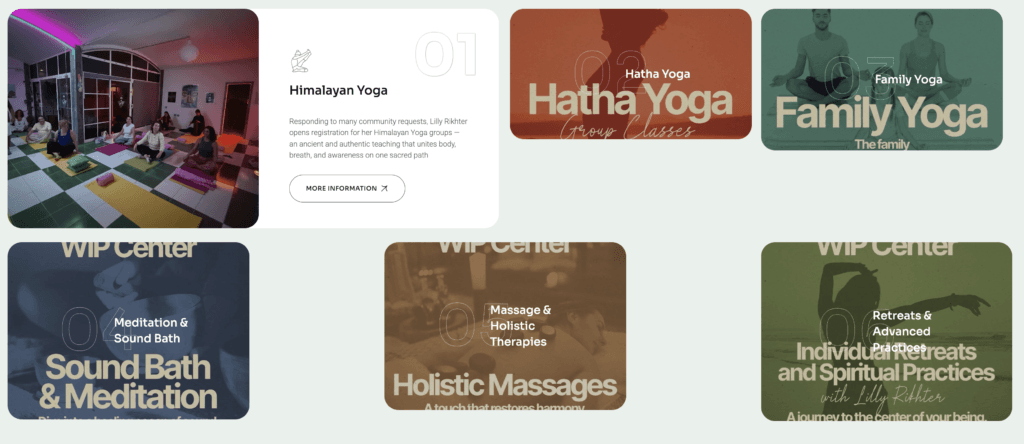
In Maspalomas, a few months ago, I opened a meditation center.
This meditation center shares the same premises as the Cyber Academy.
So the bridge already exists:
same place, same demand for clarity, same discipline of attention.
And Walk in the Park (wip.care) is part of this same ecosystem: it is the nonprofit I sponsor.
I am not telling a concept: I am describing a consistency in how I live.
A cybersecurity that begins in presence.

We can improve the systems.
But we underestimate the importance of the attention that uses them.
Cybersecurity is also the ability to: slow down, see, discern, choose.
And that... that can be trained.
Sources
- Human element in 62% of breaches, social engineering at 16%, more than 22,000 confirmed breaches analyzed: Verizon, Data Breach Investigations Report 2026, published 19 May 2026, and Verizon press release; figures summary: Mimecast.
- More than 500,000 victims assisted in 2025, up 20%, phishing the number one threat across all audiences and up 70%: Cybermalveillance.gouv.fr, 2025 activity report and threat landscape, published 26 March 2026.
- Time pressure and the fall of the discrimination index from 2.49 to 1.70, effect concentrated on loss-avoidance frauds: Lyu, Gao and Zhang, "The impact of time pressure and type of fraud on susceptibility to online fraud", Frontiers in Psychology, 10 April 2025, 170 participants.
- Security fatigue, resignation and decision avoidance, recommendation to limit the number of decisions: Stanton, Theofanos, Spickard Prettyman and Furman, "Security Fatigue", IT Professional, NIST, 2016, 40 interviews.
- Mindfulness training outperforming rule-based training on 355 participants: Jensen, Dinger, Wright and Thatcher, "Training to Mitigate Phishing Attacks Using Mindfulness Techniques", Journal of Management Information Systems, vol. 34, no. 2, 2017.
- Mindfulness applied to email, systematic processing and detection accuracy, role of affective state, 556 participants: Bera and Kim, "The nexus of mindfulness, affect, and information processing in phishing identification", Information & Management, vol. 62, no. 3, 2025; operational reading by Anna Collard, KnowBe4.
- Two weeks of training, drop in mind wandering and rise in working memory: Mrazek, Franklin, Phillips, Baird and Schooler, "Mindfulness Training Improves Working Memory Capacity and GRE Performance While Reducing Mind Wandering", Psychological Science, 2013.
Frequently asked questions
Why link yoga to cybersecurity?
Because cybersecurity is not only a matter of tools but also of inner state. The human element is present in 62% of the data breaches recorded by Verizon in 2026. Yoga and meditation train attention and presence, which are precisely what allows you not to react on autopilot when facing an attack.
Do yoga or meditation really reduce phishing risk?
Work published in the Journal of Management Information Systems in 2017 compared, across 355 students, faculty and staff at a US university, a rule-based training and a mindfulness training. The second group did better at avoiding the simulated attack, especially among people confident in their own detection ability. A study published in Information & Management in 2025 on 556 participants confirms that mindfulness applied to your inbox favors systematic processing, the mode that improves detection accuracy.
What is social engineering really after?
It is not trying to deceive through cleverness but to provoke an automatic response, relying on triggers such as urgency, authority, fear or reward. The goal is to obtain an instant where you react instead of choosing.
Do fatigue and urgency really increase the risk of being caught?
Yes, and it has been measured. In an experiment published in Frontiers in Psychology in April 2025 on 170 participants, time pressure makes the discrimination index between fraudulent and legitimate material fall from 2.49 to 1.70. NIST, for its part, documented security fatigue as early as 2016: too many security decisions produce resignation, avoidance and impulsive choices.
Is being relaxed enough to spot a scam better?
No, and it is counter-intuitive. The study published in Information & Management in 2025 shows that affective state steers the mode of information processing, and that a pleasant, loosened state pushes toward heuristic processing, the mode that lowers detection accuracy. What protects you is not relaxation, it is attention.
What ritual should you adopt before a risky action?
When a message pushes you to act fast, take a pause, take three breaths, check the domain, the context and the request, then, if in doubt, confirm through a secondary channel (a call, a message, a known number).
Is presence really a security skill?
Yes: it is the micro-second in which you shift from reaction back to discernment. Before typing a password, opening an attachment or approving an authentication, that pause lets you verify and makes you less easy to manipulate.
The author
Christophe MazzolaI write about cybersecurity as it's actually lived: governance, the human factor, and everything audit reports don't dare tell the board. Author of « Être en cybersécurité ».
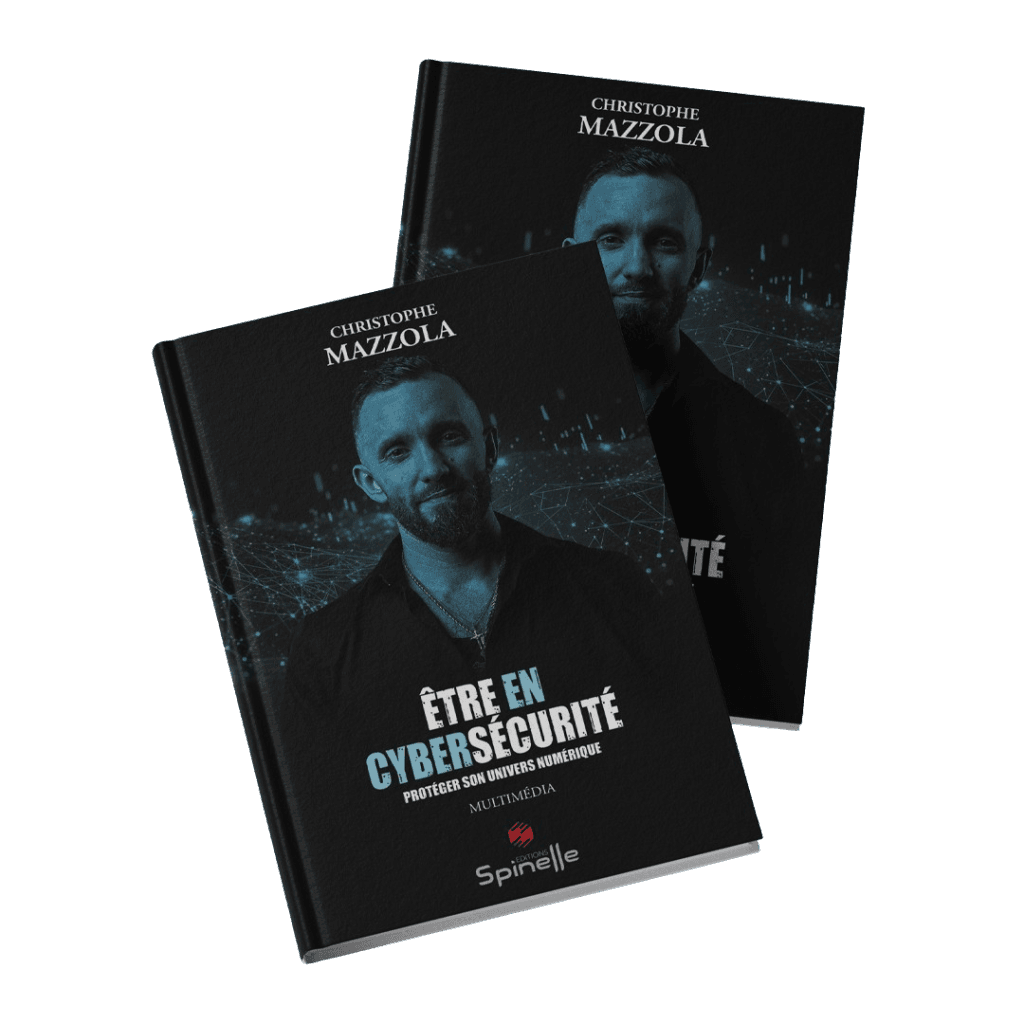
Être en cybersécurité
A cyber roadmap in plain language, for everyone, not just the experts.