It's not a question of motivation. It's a question of decision.
People often ask me how I manage so many things at once. Work, family, music, sport, talks, articles, public speaking, threat watch, reading, meetings, passing it on…, And the answer almost always disappoints…
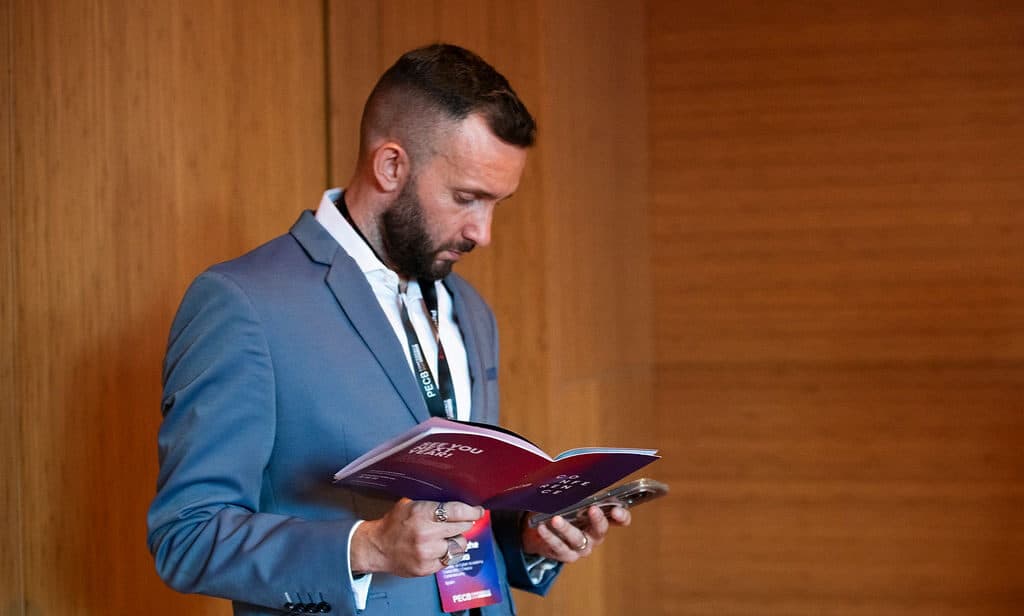
People often ask me how I manage so many things at once.
Work, family, music, sport, talks, articles, public speaking, threat watch, reading, meetings, passing it on…,
And the answer almost always disappoints.
It's not motivation.
It's not inspiration.
It's not talent.
It's a decision.
We've grown used to softness
We live in an age that celebrates intention more than action.
Where we prize vulnerability but forget resilience.
Where we "do our best" instead of doing what is necessary.
Let's be clear:
You can't claim you want to become better if you can't even make your bed.
You can't build a business, run a team or protect systems if you're incapable of giving yourself one hour without distraction.
You are the first system you have to secure.
And if it's full of flaws (excuses, procrastination, escape) then everything you build on top of it will be fragile.
Making your bed isn't a whim. Admiral William McRaven, former head of US special operations, made it the heart of his commencement address at the University of Texas in 2014: if you make your bed every morning, you will have completed the first task of the day, it will give you a small point of pride and it will push you to complete a second one, then another. Discipline doesn't start with a feat. It starts with a tiny victory, held before anyone is even watching.
The stairs test: why do we almost always take the escalator?
There's a simple test to know whether someone is ready to do what's needed: the stairs test.
Put a person in front of two choices:
- An escalator (easy, quick, effortless)
- A staircase (slightly painful now, but beneficial over the long run)
Guess what?
The vast majority of people take the escalator.
A minority take the stairs.
This isn't just an image. In 2009, at Odenplan station in Stockholm, an agency turned a staircase into a giant piano keyboard, each step playing a note. It took that, a game, for 66 percent more people to abandon the escalator and climb on foot. The lesson isn't that effort has to be made fun. It's that, left to itself, almost everyone chooses the slope that costs nothing.
And it's exactly the same in life.
Immediate ease (procrastination, distraction, excuses) is always sexier than conscious effort (discipline, clarity, rigor).
But over the long run, one wears you down, the other strengthens you.
Today's comfort is often tomorrow's discomfort.
Discipline is what's left when everything else has given out
Is motivation enough to hold the course over time?
It's not a question of "feeling".
It's a question of getting up when you don't feel like it.
Of opening that file when you're already wiped out.
Of making hard decisions when it would be simpler to pretend.
Of keeping quiet and listening when your ego wants the opposite.
It's the sum of small, deliberate humiliations.
The ones you inflict on yourself so you no longer suffer them from others.
Motivation is a mood: it rises, it falls, it depends on the night you've just had. Discipline doesn't ask desire for permission. And when two psychologists, Angela Duckworth and Martin Seligman, looked for what best predicts a teenager's academic success, IQ didn't come out on top. In their 2005 study, self-discipline counted for more than twice as much as IQ in final grades, attendance and admission to selective programmes. Talent opens one door. Discipline is what gets you through all the ones after it.
What really makes a leader?
Leadership isn't a title or posts on LinkedIn.
It's being the one people call when things go wrong.
The one who stays on their feet when everyone else panics.
The one who does what needs to be done, even when no one is watching.
You want impact? You want to take people with you? Start by disciplining yourself.
Not for the likes.
Not for the image.
For your own integrity.
Because you know you'll never be able to demand from others what you don't demand from yourself.
Every day, you choose who you become
Every email left unanswered.
Every workout skipped.
Every book never opened.
Every word not kept.
These are lines of code in your personal operating system.
And what you're building isn't just a company, a career, an image.
It's you.
You want to hack your life? Start by hacking your relationship with effort.
It's also what James Clear, the author of Atomic Habits, keeps hammering home: goals are useful for planning your progress, but systems are what produce it. Fix the inputs, he writes, and the outputs will fix themselves. Your system is those tiny routines, held or dodged day after day, far more than the grand resolution announced in January.
In short
You want to become stronger? Be clear-eyed.
You want to inspire? Be consistent.
You want to progress? Be radical.
You want to respect others? Start by respecting yourself.
No need for a miracle.
No need for a guru.
No need for dopamine.
Just: a decision.
And a promise you won't let go of. Even when it's hard.
Especially when it's hard.
Sources
- Angela Duckworth and Martin Seligman, "Self-Discipline Outdoes IQ in Predicting Academic Performance of Adolescents", Psychological Science, 2005.
- Admiral William H. McRaven, commencement address at the University of Texas at Austin, 2014, "Make Your Bed": speech transcript.
- Musical staircase at Odenplan station in Stockholm, Volkswagen's "The Fun Theory" campaign, 2009: Classic FM.
- James Clear, "Forget About Setting Goals. Focus on This Instead": goals versus systems.
Frequently asked questions
According to the author, what makes it possible to handle so many things at once?
Not motivation, inspiration or talent, but a decision you own and hold, even when it's hard.
Motivation or discipline: which one best predicts success?
A study by Angela Duckworth and Martin Seligman (2005) showed that, among adolescents, self-discipline counted for more than twice as much as IQ in final grades, attendance and admission to a selective programme. Motivation fluctuates; it's consistency that accumulates.
What does "you are the first system you have to secure" mean?
Before building a business, running a team or protecting systems, you have to deal with your own flaws (excuses, procrastination, escape), otherwise everything you build on top of them stays fragile.
What is the stairs test?
A simple test: faced with an escalator and a staircase, almost everyone chooses immediate ease. At Odenplan station in Stockholm, a staircase had to be turned into a giant piano before 66 percent more people preferred it to the escalator: over the long run, conscious effort strengthens where comfort wears you down.
Why start your day by making your bed?
Because one task completed pulls the next one along. That is the idea behind Admiral William McRaven's 2014 address: making your bed every morning gives you a small point of pride and sets the rest in motion. Discipline is built on tiny victories, held.
How does the article define leadership?
Not a title or posts shown off on LinkedIn, but reliability: being the one people call when things go wrong, staying on your feet in the panic and acting even when no one is watching.

The author
Christophe MazzolaI write about cybersecurity as it's actually lived: governance, the human factor, and everything audit reports don't dare tell the board. Author of « Être en cybersécurité ».

Être en cybersécurité
A cyber roadmap in plain language, for everyone, not just the experts.